
Minimally-Invasive Neuromodulation
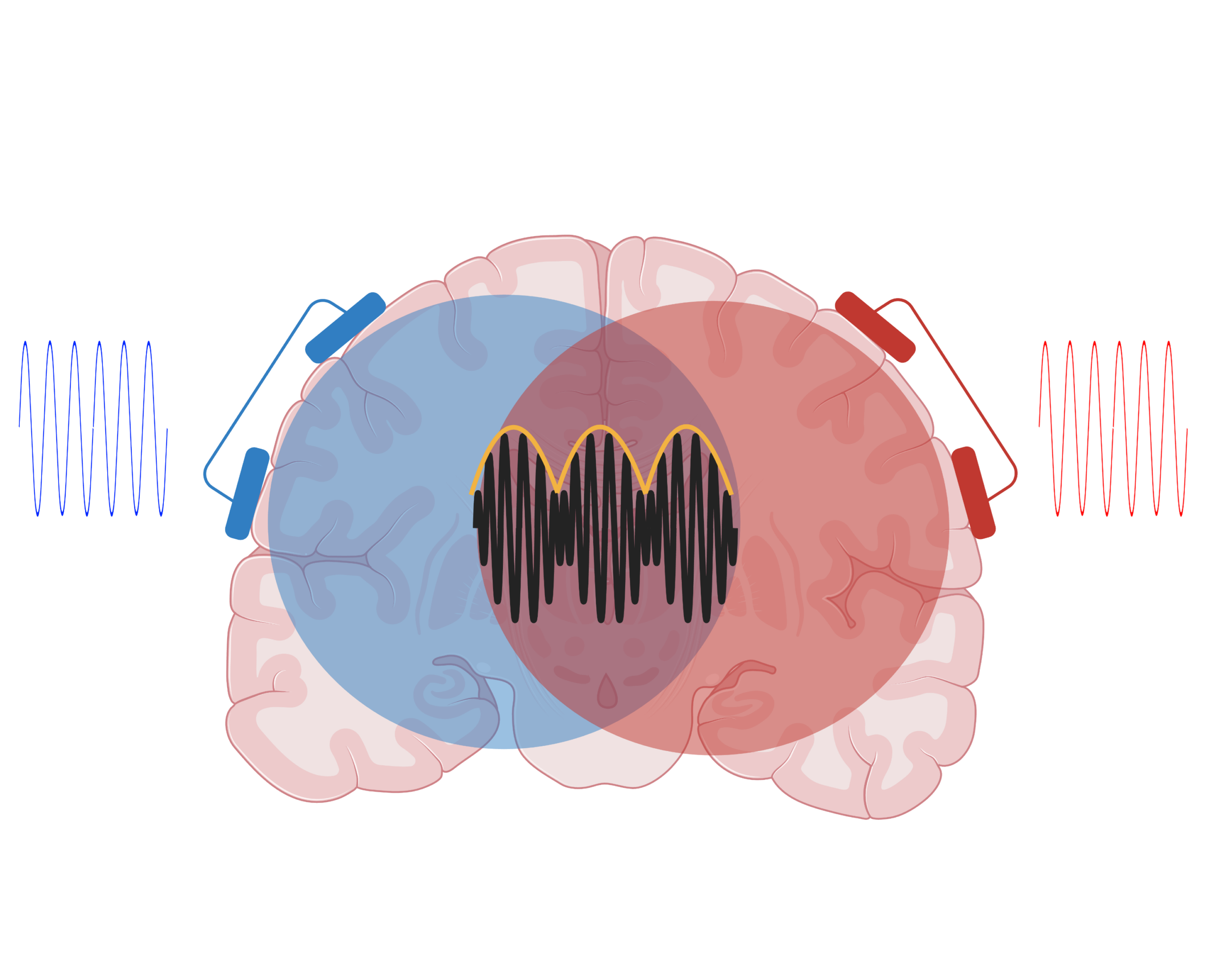
Invasive neuromodulatory approaches alleviate the symptoms of many neurological conditions, but they require brain surgery. We are currently investigating the viability of multiple different approaches to modulate deep brain targets without surgical entry, including directed electromagnetic fields and temporal interfering currents applied transcranialy or transduraly. While deep focal activation via distant electrodes was previously considered computationally unrealistic, our lab has generated substantial evidence demonstrating that appropriate multi-frequency envelopes can indeed modulate neural activity at depth. This work involves rigorous optimization of electrode placement and current steering to ensure that the maximum field intensity is localized precisely within the target volume, minimizing off-target effects in the superficial cortex.
Real-Time Bidirectional Interfaces
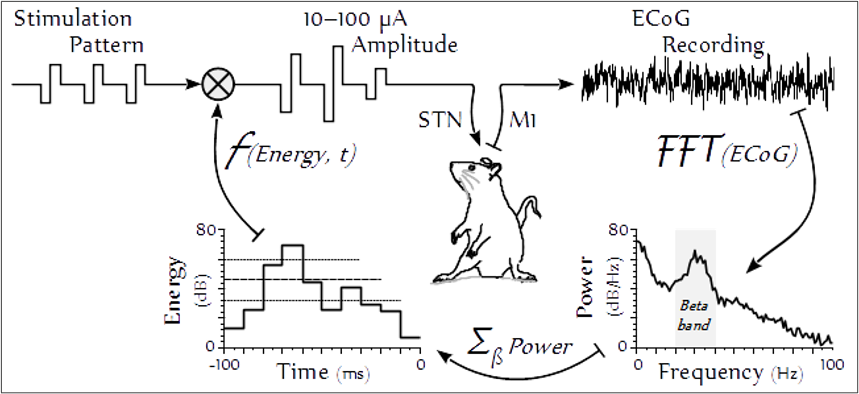
Traditional neuromodulation typically operates in an open-loop fashion, providing a constant drive regardless of the patient's immediate physiological state. However, bidirectional interfaces can both sense and stimulate in a dynamic, closed-loop architecture. By integrating neurophysiologic sensing with focused modulation, we are building adaptive frameworks that bridge the gap between experimental approaches and robust, clinically viable therapies. This work often leverages the Real-Time eXperiment Interface (RTXI), a high-performance software platform we helped develop to manage the rigorous timing requirements of hard real-time electrophysiological applications. Combining computational optimization with subject-specific feedback will enable responsive and highly personalized therapies in the next generation of neural interfaces.
Bicer Y, Hall J, Rampersad S, Brooks D, Dorval AD, Yarossi M (2025). “A real-time optimization-based approach to phase-specific triggering during transcranial current stimulation.” Proc IEEE Neural Engineering Research, in press.

Neuroengineering Devices
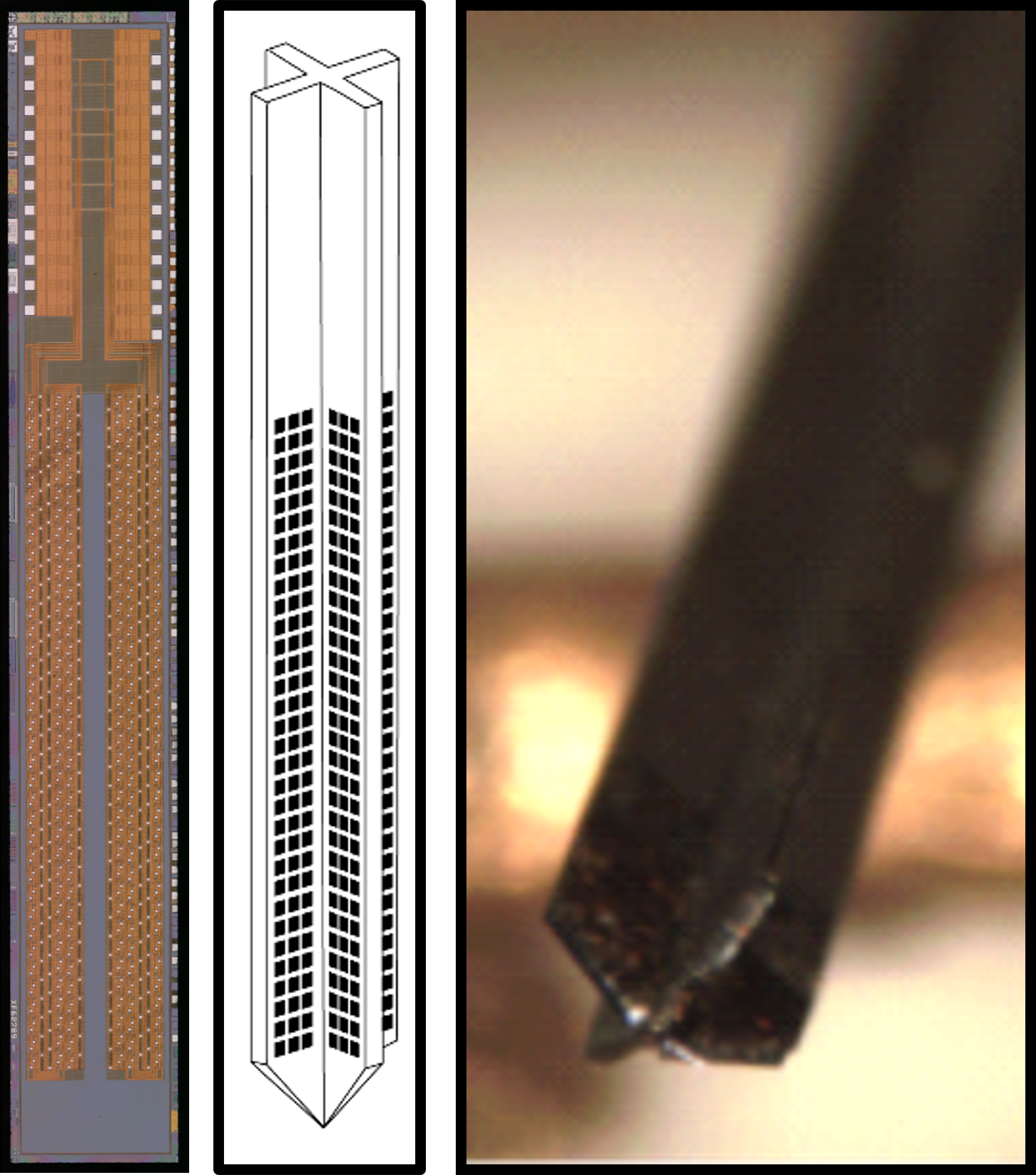
The clinical success of neuromodulation is fundamentally constrained by the resolution of the physical interface between technology and biology. Traditional electrodes often lack the spatial granularity required to selectively engage specific neural pathways without affecting adjacent structures. To address this, we are developing advanced hardware architectures, including high-density, charge-steering arrays such as the µDBS. By utilizing novel electrode geometries with thousands of individually controllable contacts, we can implement computational field shaping to accommodate surgical targeting errors and optimize the recruitment of small-diameter fibers. Our work spans the entire development pipeline—from the fabrication and bench testing of these high-resolution probes to the design of application-specific customizable architectures. These next-generation neural interfaces provide the necessary precision to shift from broad, regional stimulation toward highly targeted, patient-specific circuit modulation.