Neural Effects of Electrical Stimulation in Computational Models

We build multiscale computational models of neural activation in Deep Brain Stimulation (DBS) therapy. DBS is a clinically used and widely effective treatment for the symptoms of Parkinson's disease, essential tremor, and other neurological disorders. However, which neurons and neural regions are activated by DBS is not presently understood. With our biophysical computational models -- scaling from individual neurons to the entire brain -- we aim to understand how electric fields modulate neural activity, and to develop precise constraints that clinicians could use to optimally target neural structures.

Anderson DN, Dorval AD, Rolston JD, Pulst SM, Anderson CJ (2021). “Computational investigation of the impact of deep brain stimulation contact size and shape on neural selectivity.” J Neural Eng, 18(5):056004, PMID:33721858.

Anderson CJ, Anderson DN, Pulst SM, Butson CR, Dorval AD (2020). “Neural selectivity, efficiency, and dose equivalence in deep brain stimulation through pulse width tuning and segmented electrodes.” Brain Stimulation, 13(4), PMC:7308191.

Anderson DN, Duffley G, Vorwerk J, Dorval AD, Butson CR (2019). “Anodic stimulation misunderstood: preferential activation of fiber orientations with anodic waveforms in deep brain stimulation.” J Neural Eng 16(1):016026, PMC:6889961.

Duffley G, Anderson DN, Vorwerk J, Dorval AD, Butson CR (2019). “Evaluation of methodologies for computing the deep brain stimulation volume of tissue activated.” J Neural Eng, 16(6):066024, PMC:1834769.

Anderson DN, Osting B, Vorwerk J, Dorval AD, Butson CR (2018). “Optimized programming algorithm for cylindrical and directionally segmented deep brain stimulation electrodes.” J Neural Eng, 15(2):026005, PMID:29235446.

Patient-Specific Neuromodulatory Data Analysis

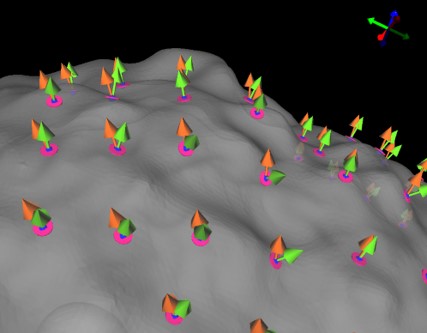
We utilize advanced data analysis and computational approaches to evaluate neural activity and clinical outcomes in patients receiving neuromodulation therapy. While invasive neuromodulation provides significant symptomatic relief, the optimal stimulation parameters vary across individuals and over time. Using clinical datasets—including intraoperative recordings and chronic sensing from responsive neurostimulation systems—we validate patient-specific biomarkers and characterize the structural connectivity that informs therapeutic success. By integrating these longitudinal data, we aim to develop automated tuning algorithms and visualization tools that assist clinicians in identifying the most effective, personalized stimulation protocols for managing neurological diseases.
Charlebois CM, Anderson DN, Smith EH, Davis TS, Newman BJ, Peters AY, Arain AM, Dorval AD, Rolston JD, Butson CR (2024). “Circadian changes in aperiodic activity are correlated with seizure reduction in patients with mesial temporal lobe epilepsy treated with responsive neurostimulation.” Epilepsia, 65(5):1360-1373, PMID:38517356.

Charlebois CM, Anderson DN, Johnson KA, Philip BJ, Davis TS, Newman BJ, Peters AY, Arain AM, Dorval AD, Rolston JD, Butson CR (2022). “Patient-specific structural connectivity informs outcomes of responsive neurostimulation for temporal lobe epilepsy.” Epilepsia, 63(8):2037-2055, PMID35560062.

Charlesbois CM, Caldwell DJ, Rampersad SM, Janson AP, Ojemann JG, Brooks DH, MacLeod RS, Butson CR, Dorval AD (2021). “Validating patient-specific finite element models of direct electrocortical stimulation.” Front Neurosci, 15:691701, PMC:8365306.